
Daniel and I have been long distance for three years. He is in Portland, I am in San Antonio, and two hours of time zone sit between us like a piece of furniture neither of us can move. In those three years I have sent him several thousand text messages. I know because I scrolled back through them once on a slow night shift and got tired of scrolling before I reached the beginning.
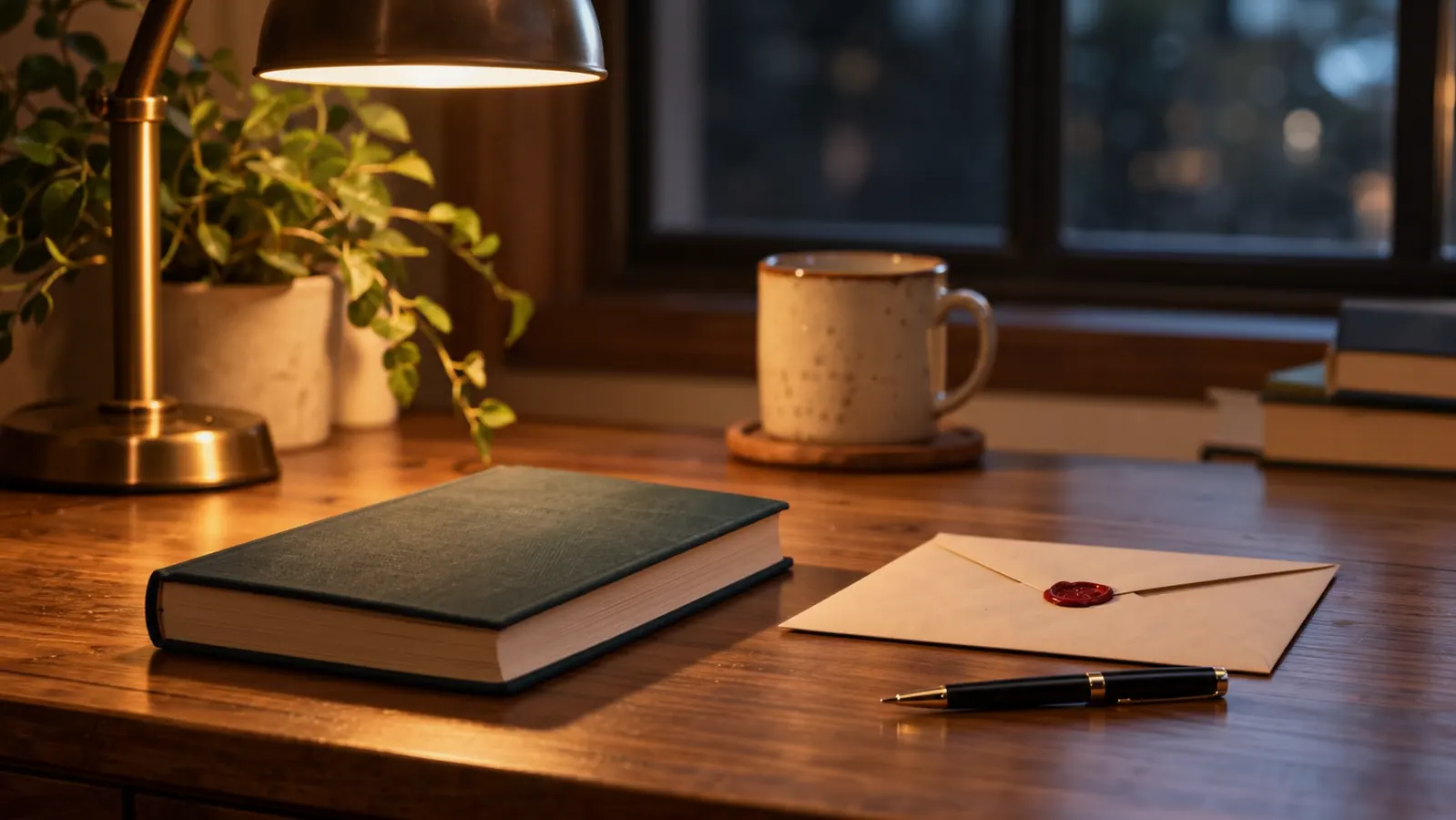
Last fall I bought Letters to My Love, a book from Chronicle Books. It is small, 3.8 by 0.8 by 8 inches and 4.8 ounces, and it holds twelve letters. You write them by hand, one at a time, seal each one, and then either hand it over or mail it. There is no app, no pairing, and no charging cable, because the whole thing operates manually. It lives in my desk drawer between letters. I have filled in a handful so far, not all twelve. Here is why it has done more for us than anything I have typed.
Twelve letters beat a thousand texts. Start with one.
Letters to My Love from Chronicle Books is a small book with twelve letters you fill in by hand, seal, and hand over or mail. Nothing to charge, nothing to pair, nothing that drops a signal. Mine lives in a desk drawer and comes out when I have something worth keeping.
Amazon See Letters to My Love on Amazon →Ten Reasons, In the Order I Would Argue Them
A text is gone in four seconds. A letter is still there next month.
On a workday I probably send Daniel forty messages. He reads them between site visits and answers with a thumbs up, and by Thursday neither of us could tell you what we said on Tuesday. A letter does not work that way. There is nothing to scroll past and nothing to delete, so he keeps them. He has read the first one three times, and he quoted a line back to me from memory on a call in January. I have screenshots of texts. He has letters in a drawer.

A sealed envelope is harder to ignore than a notification
Daniel left the second letter on his kitchen counter for two days before he opened it. When I asked why, he said he wanted to wait until he had time to actually read it, not skim it standing up. That is not a thing anyone has ever said about a text. The letter sat there and waited, and he thought about it twice a day until he finally sat down with it at his kitchen table on a Sunday morning.
It says the things I never manage to say at the airport
Every six weeks one of us flies, and the goodbye at the gate is always the same. We say something about traffic and something about texting when I land, and then I get on the plane with a list of things I meant to say still in my head. So I write them down before the visit and hand the letter over at the end of it. The airport version of me is not articulate. The desk version of me is.
No signal, no battery, no charging cable
Our other long distance things all need something. The lamp runs on 2.4 GHz Wi-Fi and dropped off once after I replaced my router, which cost me about ten minutes in the app to fix. The bracelet pairs through its own app, and I forgot to charge it before a shift once and it died halfway through. The letter needs none of that. Manual operation is underrated in a relationship built on devices that fail.
It packs in a carry-on without a second thought
The book is 3.8 by 0.8 by 8 inches and 4.8 ounces, so it slides into the front pocket of my carry-on next to a paperback and I forget it is there until I sit down. I have flown with it twice, once planning to write on the plane and once planning to hand it over filled in. The first time I wrote two letters at 30,000 feet while the person beside me pretended not to read over my shoulder.
It gives the last ten minutes of a visit something to do
The end of a visit is the worst part of the whole arrangement. Four days together, then a ride to the airport and a terminal that smells like carpet cleaner. Handing over a letter at the door does something to that last ten minutes. It is not a fix, and I would not tell you it is. It just puts something in your hands that is not a suitcase handle.
It gives him something to open on a Tuesday that is not a bill
I mailed one in March, on a week when nothing was happening. No birthday, no anniversary, no argument to make up for. He sent a photo of the envelope on his kitchen counter with no caption and then called me that night. The ordinary timing is the part that worked. A letter that shows up on a random Wednesday says more than one that shows up on Valentine's Day, because there is no script for it.
Slower is the point, and it took me a year to believe that
The lamp is instant. The bracelet buzzes the second I think of him. Those are the right tools for the middle of a shift when I have thirty seconds and a patient chart in my other hand. The letter is the opposite, and for a long time I assumed that made it less useful. I was wrong. Twenty minutes with a pen forces me to decide what actually matters, and about four sentences of that is worth more than the forty messages I send in a day.
Twelve letters is an archive, and it survives a dead phone
This is part of a book series from Chronicle Books that has sold more than 2 million copies worldwide, which sounds like a line until you hold one and understand why so many people buy them. Twelve letters is a record of a year of a relationship. It sits in a drawer in Portland and it will still be there in ten years. My texts from 2023 are a scroll I will never finish.
You do not need an occasion, a good week, or the right words
I wrote one after a shift that went badly, at 2 a.m., with no attempt at being romantic. Four sentences about a patient, a vending machine, and wanting to be in a different kitchen. He said it was the best one. If you are waiting for a moment that feels worth writing down, you will wait through most of the year. Write on the ordinary night instead.
He has read the first one three times, and he quoted a line back to me from memory. Nothing I have ever typed has been quoted back to me.
What I'd Skip
I looked hard at the open-when envelope kits before I bought this and skipped them. I have never owned a set, so I am judging from the listings and from a friend who had one, but twelve separate envelopes with dates printed on the outside felt like homework, and a few of those dates would have passed without me filling anything in. Guilt is not a good engine for a gift. A book that stays in a drawer is easier to come back to because nothing on it is shouting about what day it is.
The other thing I would skip is filling all twelve at once. I know someone who sat down on a single Sunday and wrote the whole thing, and then had nothing left to give for the rest of the year. The point is the drip, one letter at a time, whenever there is something real to say. I have written a handful in a year and I am in no hurry. This is not a project with a deadline, and the person on the other end can tell the difference between a letter you meant and a letter you completed.
One letter is a better Tuesday than forty texts.
Twelve handwritten letters, sealed and handed over or mailed. It is the only piece of our long distance setup that has never dropped a signal and never needed a charge. The copy I own came from Chronicle Books and it lives in my desk drawer, and I add to it when something is worth keeping.
Amazon See the letter book on Amazon →