
Daniel and I have been long distance for three years. He is a civil engineer in Portland, Oregon. I am Camila, an ER nurse in San Antonio, Texas, working rotating twelve hour shifts. The distance between us is two time zones and a four hour flight. We see each other about every six weeks, four days at a time, alternating who flies, and then one of us is back in an airport with bad coffee and a rolling suitcase. Everything else happens through a screen.
Last fall I bought a copy of Letters to My Love, the fold-and-mail letter book from Chronicle Books, because I had noticed something I did not like. I could not remember the last full sentence Daniel and I had said to each other that was not typed. Not a card. Not a note on the back of a receipt. Three years of texts and voice memos and nothing either of us could hold in a hand. The book holds twelve letters, it lives in the top drawer of my desk between visits, and this is what a full year of actually using it has been like, including the parts that were slower and more awkward than I expected when I ordered it on a Tuesday night in October.
The Quick Verdict
A slow, handwritten counterweight to a relationship that runs on texts. The prompts carry the writing, the paper holds up in the mail, and twelve letters will take you far longer than a weekend. It is not a daily habit and it will not fix a hard month.
Amazon Check Today's Price →Twelve letters, four days of writing, and something to hand him at the gate
This is the only part of my relationship that takes a week to arrive, and it is the part Daniel rereads. If your week together is all screens, start here.
Amazon Check Today's Price on Amazon →How I've Used It
I ordered it that Tuesday night in October, not for an anniversary and not for a birthday. I was tired of my own texting and I wanted one thing in my week that took longer than four seconds. It arrived as a small hardcover, 3.8 by 0.8 by 8 inches and 4.8 ounces according to the listing, which puts it somewhere between a slim notebook and a thick paperback. It fits in a desk drawer with room to spare, and it has stayed in that drawer for a year.
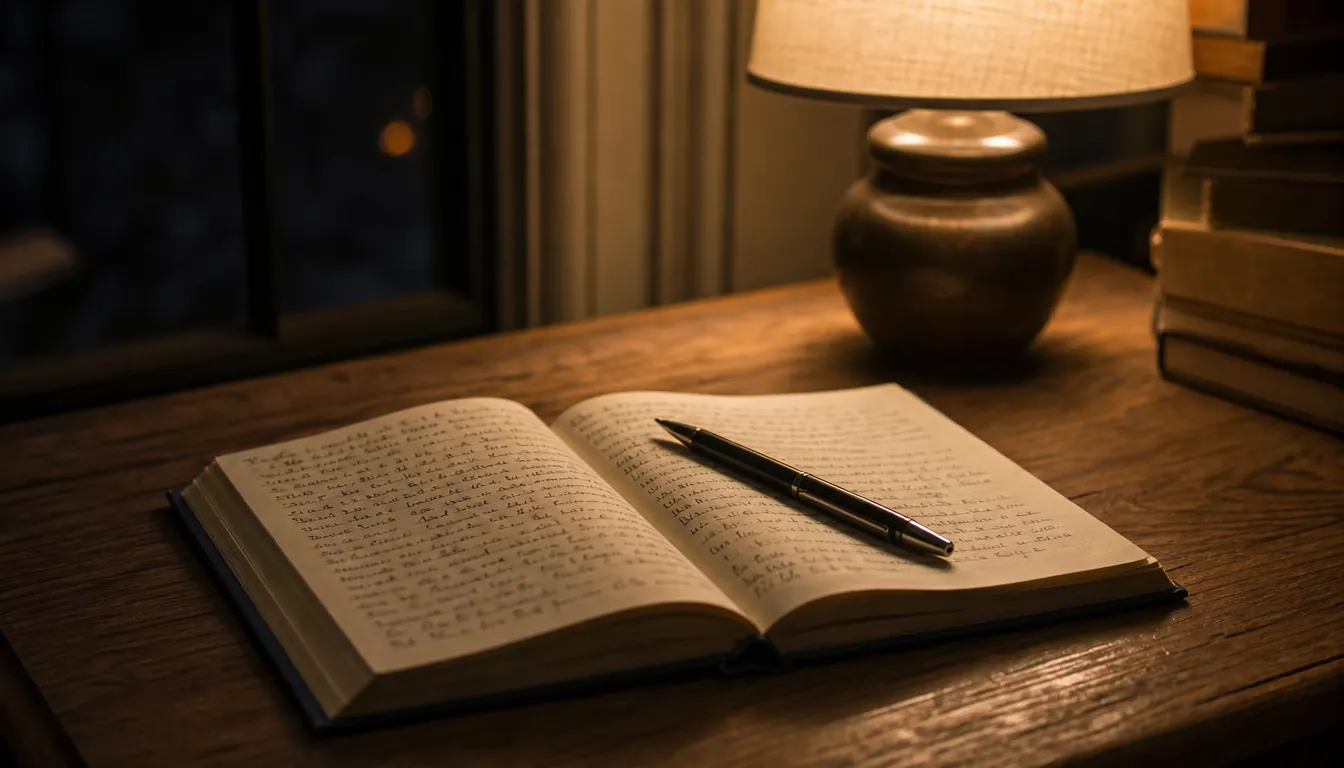
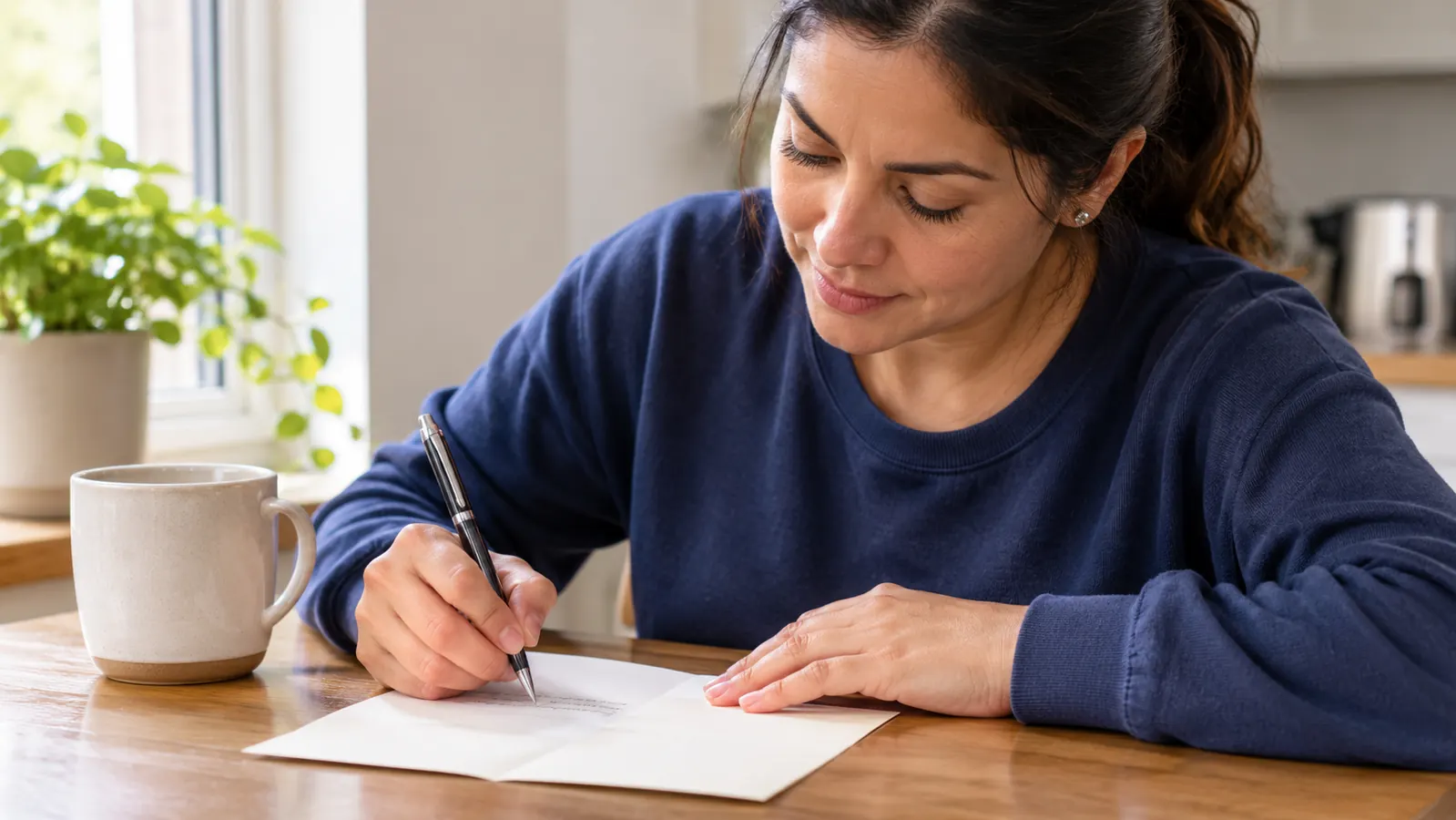
I do not sit down and finish a letter in one sitting. I write one across four or five days, a few lines at a time, usually late at night after a shift when I am too wired to sleep and too tired to explain my day out loud. The book goes back in the drawer between those sessions. When a letter is finally done I fold it along the printed lines, press the seal down, and either hand it to Daniel at the end of a visit or drop it in the mail on my way to the airport. The book stays home either way.
The second letter I wrote was the one about the airport, and it is the clearest example of how this goes. I started it on a Wednesday after a shift that ran long, because a trauma came in at 6:40 and I did not walk out until nearly nine. I wrote two lines in the parking garage with the interior light on, which is not a reasonable place to write anything, and then I drove home and left the book open on the counter for three days. I finished it the following Sunday morning with coffee and no deadline. Four days for something the version of me at 11 p.m. would have texted in twelve words.
In a year I have finished four of the twelve. That part is deliberate. Twelve letters written in one enthusiastic weekend would be twelve letters Daniel reads in one weekend, and the whole reason this works is that it arrives slowly, one at a time, on an ordinary Tuesday when nothing else is happening. I still have eight left in the drawer and I like knowing exactly where they are.
What's Actually Inside the Book
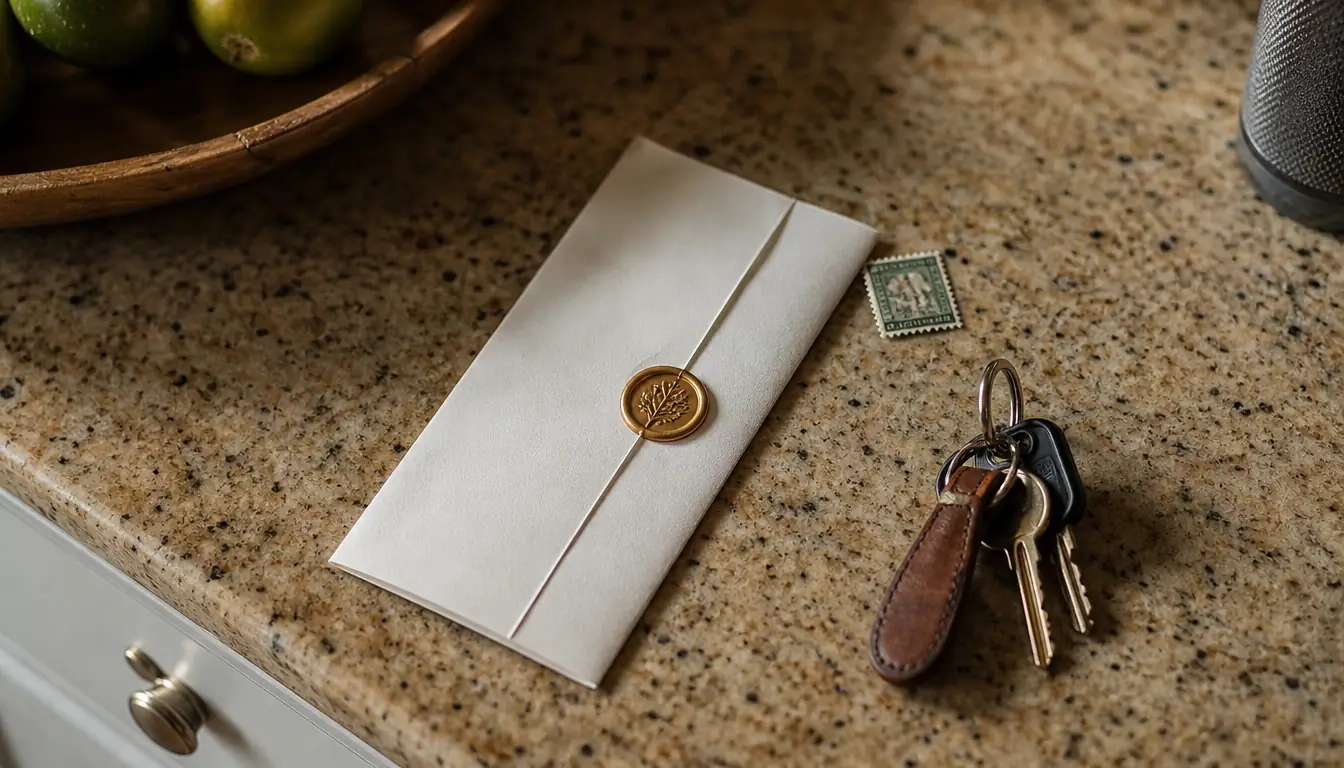
Twelve letters, each with a prompt printed above the writing space. The format is the reason it works at all: the letter is the envelope. You write on it, fold it, seal it, and mail it as is. No separate envelope to hunt for. No card that needs a bigger envelope that needs a stamp you do not have at eleven at night. You do still need postage if you are mailing rather than handing it over, but that is the only outside supply the whole thing requires.
Physically it is a book you can hold in one hand. Eight inches tall, 0.8 inches at the spine, 4.8 ounces, which makes it lighter than my phone. The pages are the letters and the letters are the pages, so there is no part of this you can lose separately, and nothing needs to be assembled before it counts as a gift. I have owned notebooks where the cover survived and the pages gave out by month three. After a year of being opened and closed in a drawer, the outside of this one is still flat and the corners are still square.
Chronicle Books has been publishing this series for years, and the listing states that the series has sold more than two million copies worldwide. That number tells you two things at once. A lot of people are genuinely doing this, and a lot of people probably bought it meaning to and never wrote a line. Based on how long my own first letter took, I believe both.
The listing also names the operation mode as manual, which is a dry way of saying there is nothing to charge, nothing to pair, no app to download and no notification to dismiss. It does not need Wi-Fi to function and it cannot glitch on you at the end of a bad shift. The paper is heavier than a standard greeting card and takes an ordinary ballpoint without bleeding through, which matters more here than usual, because once you fold the page the back of it becomes the outside of the thing you are sending.
The Prompts Do Most of the Work
I am not a letter writer. I write nursing notes and grocery lists. Hand me a blank page and instructions to be romantic and you get three sentences and a doodle of a dog. The prompts are the reason this book did not end up in the drawer permanently. Each letter asks you for something particular rather than inviting you to express your feelings in general, and a particular question is dramatically easier to answer than a vague one. You are not being asked to be poetic. You are being asked to remember something.
My first letter took four days because I kept stopping. I would write a line, decide it was too much, and close the book. Then I would come back the next night and write two more. That is the honest experience of this product and I think you should hear it before you buy: it is not a five minute gift. It is four evenings of small decisions followed by ten seconds of folding.
The third prompt was the hardest one for me, and I am going to be careful here because the prompts are a real part of what you are buying and I do not want to spoil the specifics. What I will say is that it asked for something I had to go look up. I sat on the floor of my apartment with my phone open to old photos, which is a thing I have not done in years, and by the time I wrote the answer I had spent forty minutes remembering a version of us I had not thought about since the first year. That is not a feature you can list on a box. It is the actual reason I keep the book in the drawer instead of the closet.
What came out the other end was better than anything I have written him in three years, including the long messages I labored over at two in the morning. Some of that is the handwriting. When you write by hand your sentences get shorter and more honest, because you can hear yourself getting dramatic and you stop. The other part is that ink does not have a delete key, so you commit to the sentence and move on.
Sending It: Mail, Handoff, and What Actually Arrives
I have done both, and they are different gifts. Handing a finished letter over at the end of a visit is the better version, because you get to watch his face while he reads it and you are both still in the same room. Mailing it is the version that actually uses the format. I mailed one from San Antonio to Portland and it arrived with a creased corner and nothing else wrong. The fold held, the seal held, and the ink did not smudge.
The mailing itself is unglamorous in a way I have come to like. I wrote the address on a Thursday, checked it twice against my own handwriting, and walked it to the counter rather than the blue box on the corner, because I wanted a human being to look at it before it went anywhere. The clerk asked if there was anything fragile inside. I said no, and then thought about it for the rest of the drive home. It landed in Portland six days later and Daniel sent me a photo of the envelope sitting on his kitchen counter before he opened it.
One practical warning: write the address small and check it twice. There is no second copy. You are not printing a backup of this.
The size also matters for a reason I did not expect. Because it fits in a drawer and closes flat, it does not look like a project sitting out on a table waiting for you to fail at it. It looks like a notebook. That sounds like nothing. It is the difference between a book I finished four letters in and a book I would have quietly stopped opening.
What It Did and Didn't Change
Here is the honest part. It did not make us talk more. It did not repair the week in February when we argued for three days about a scheduling problem that was really about both of us being exhausted. A book is not a repair crew and I would not trust a review that told you otherwise.
What it did was give us one thing in the relationship that is slow. Everything else in our week is instant. The lamp on my nightstand that tells him I got home from a shift. The bracelet that buzzes when I am thinking about him and cannot look at my phone. The texts, the calls, the photos of his kitchen counter. The letters are the only part of us that takes a week to land, and that turns out to matter more than I expected when I ordered it.
Daniel reads each one more than once, which is more attention than any single text I have ever sent him has received. He is not a demonstrative person. His review of the first letter was the words "this is good" in a completely normal voice, and then he read it again on the plane home. From him, that is a rave.
What I Liked
- Twelve prompted letters, so you are never staring at a blank page
- Fold-and-mail format means no envelope to find and no assembly required
- Small and light at 3.8 by 0.8 by 8 inches and 4.8 ounces, so it stores in a drawer
- Paper takes ballpoint ink without bleeding through to the outside
- Nothing to charge, nothing to pair, no app, no Wi-Fi, nothing to update
- Slow by design, which is the entire reason it works
Where It Falls Short
- Twelve is the whole book. There is no refill and no extra pages
- Most people will spend several evenings on a single letter
- Only one person writes unless you buy two copies
- It lands flat if your partner does not read things
- Not a daily habit, so it cannot carry a whole relationship on its own
I have finished four letters in a year. Daniel has read each one twice. No text I have ever sent him has gotten that kind of attention.
Who This Is For
You are a year or two or three into a long distance relationship and you have run out of new ways to say the same true thing. You are the person who will hand something over at the end of a four day visit and then sit in an airport wishing you had said more. You write things down sometimes, or you used to, or you want to. That is the whole profile. You do not need to be good at writing. The prompts handle the blank page and you handle the memory.
It is also a solid gift for someone else's long distance relationship, provided you know the couple well enough to know they are the type to write. It travels flat, it does not need sizing or a color preference, and it does not require you to know anything about their Wi-Fi, which is more than I can say for half of what gets marketed to people in our situation. Chronicle Books made the thing durable enough to be a real object and plain enough that it does not feel like a greeting card with extra steps.
One note for the person buying it as a gift rather than using it themselves. It arrives looking like a book, not like an event, so the reaction at the moment of unwrapping will be polite rather than loud. The reaction comes later, in the weeks after, when the first letter shows up somewhere unexpected. If you are the sort of person who needs the big reaction on the day, buy this alongside something else and let this one work quietly.
Who Should Skip It
Skip it if you hate writing by hand. This is not a book you can shortcut with a note in your phone, and if handwriting is a chore for you then the chore will show up in the letter. Skip it if you are three weeks into a relationship, because twelve prompted letters is a lot of emotional weight to put on something that new. Skip it if you want a gift that produces a reaction in sixty seconds, since this one produces a reaction four days after you start it.
Skip it if what you actually want is structure, meaning letters for specific occasions, opened on specific days. The open-when envelope kits do that job and do it well, though I have never used one and I am going only on the listings and a friend's setup. And if your goal is keeping a daily connection across two time zones, this is not that product. That job belongs to a lamp on the nightstand, a bracelet that buzzes during a shift, or a two minute call. This is the thing you do a few times a year, slowly, and then wait for it to arrive.
The thing you will still have after the next airport goodbye
Four letters in, this is the only gift I have bought for Daniel that he reads twice. Twelve prompts, one drawer, no app, nothing to charge.
Amazon Check Today's Price on Amazon →