
The hardest part of a long distance relationship is not the airport goodbye. It is the Tuesday three weeks later, when nothing has happened, nothing is scheduled, and the last thing you sent each other was a screenshot of a weather forecast. Daniel and I have been doing San Antonio to Portland for three years now, two time zones apart, one visit every six weeks or so, four days at a time. We are good at the big days. We are good at arrivals and at the leaving, which is its own skill. It is the flat middle that wears on you.
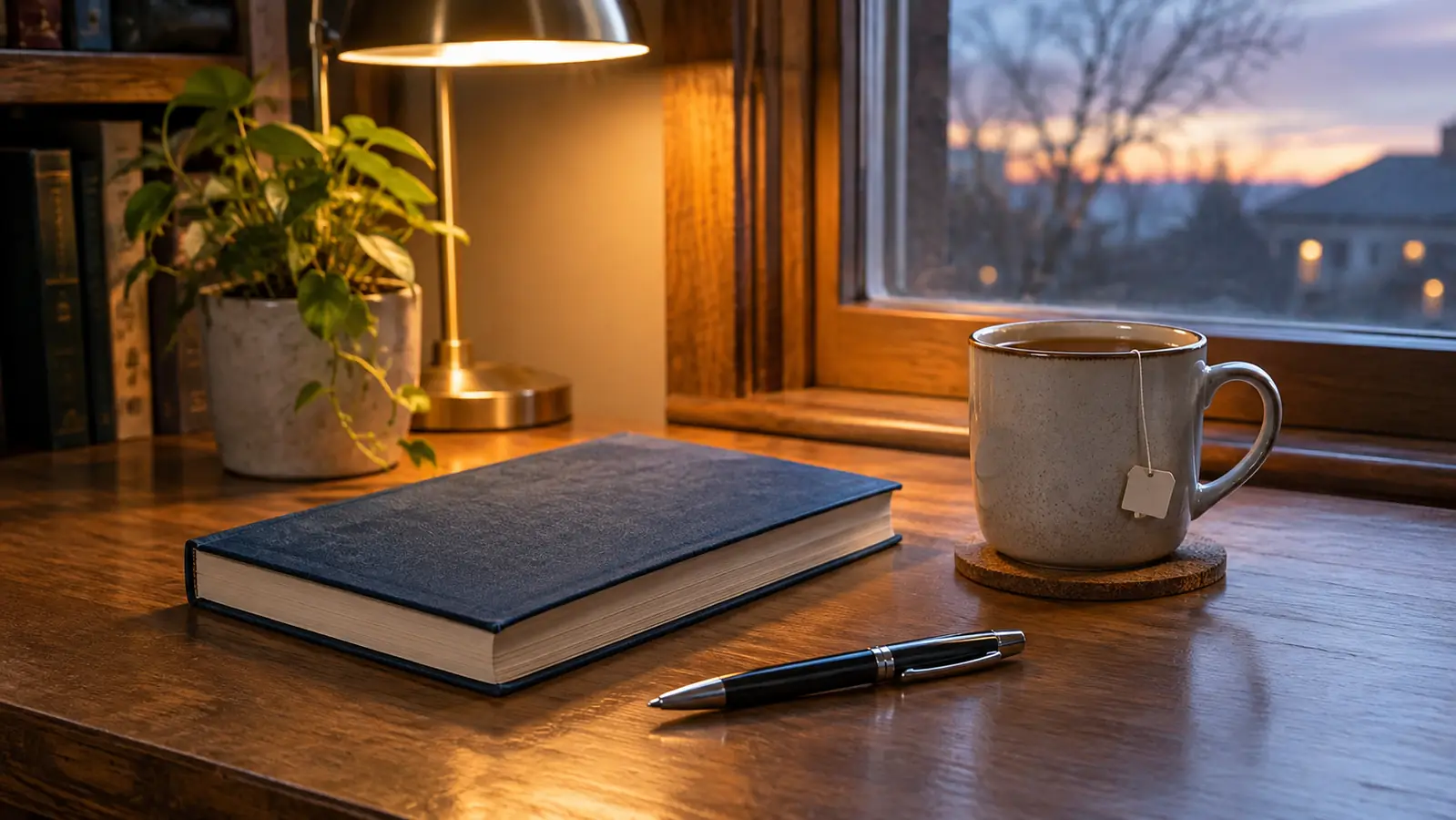
I tried a lot of things to fill that middle, and most of them were digital, which is fine in the way a group chat is fine. Forgettable. Then a year ago, in the fall, I bought Letters to My Love by Chronicle Books. It is a hardcover book of prompted letters that you answer in your own handwriting, seal, and give to your partner to open later. It measures 3.8 by 8 inches and weighs under five ounces, which matters more than it sounds like it should, because a thing that small fits in a desk drawer and actually gets used. What follows is my whole process, including the two steps I got wrong for the first few months.
A book of prompts, a pen, and about twenty minutes
Letters to My Love is a hardcover book from Chronicle Books. Every page is a prompt you answer by hand, then seal and hand over. No app, no charging cable, nothing that needs an update before it works.
Amazon Check Today's Price on Amazon →Step 1: Pick the prompt that fits the next six weeks
The prompts are not all the same temperature. Some are light and easy to answer on a lunch break. Some ask you to describe a specific day you remember, which takes longer than you think it will. A few will make you set the pen down for a minute and look out the window. The first mistake I made was working through the book in order, front to back, because that is what you do with a book. What I got was a letter about a topic I did not care about that particular week. It read like homework, because that is what it was.
Now I read three or four prompts before I commit to one, and I pick the one that matches what is actually ahead of us. If he has a hard month at work coming, I pick a prompt that puts a good week back in front of him. If the next visit is six weeks out and I am already counting days, I pick one about waiting. Reading takes two minutes on the couch. Writing the wrong one takes twenty and produces a page neither of us wants to keep.
Write the prompt number on a sticky note on the inside cover when you start, or on the back page. Not for him. For you. A year in, you will not remember which ones you have already done, and you will sit down to write a second version of the same letter without noticing until page two.
Step 2: Write it in one sitting, in pen, and leave the mistakes alone
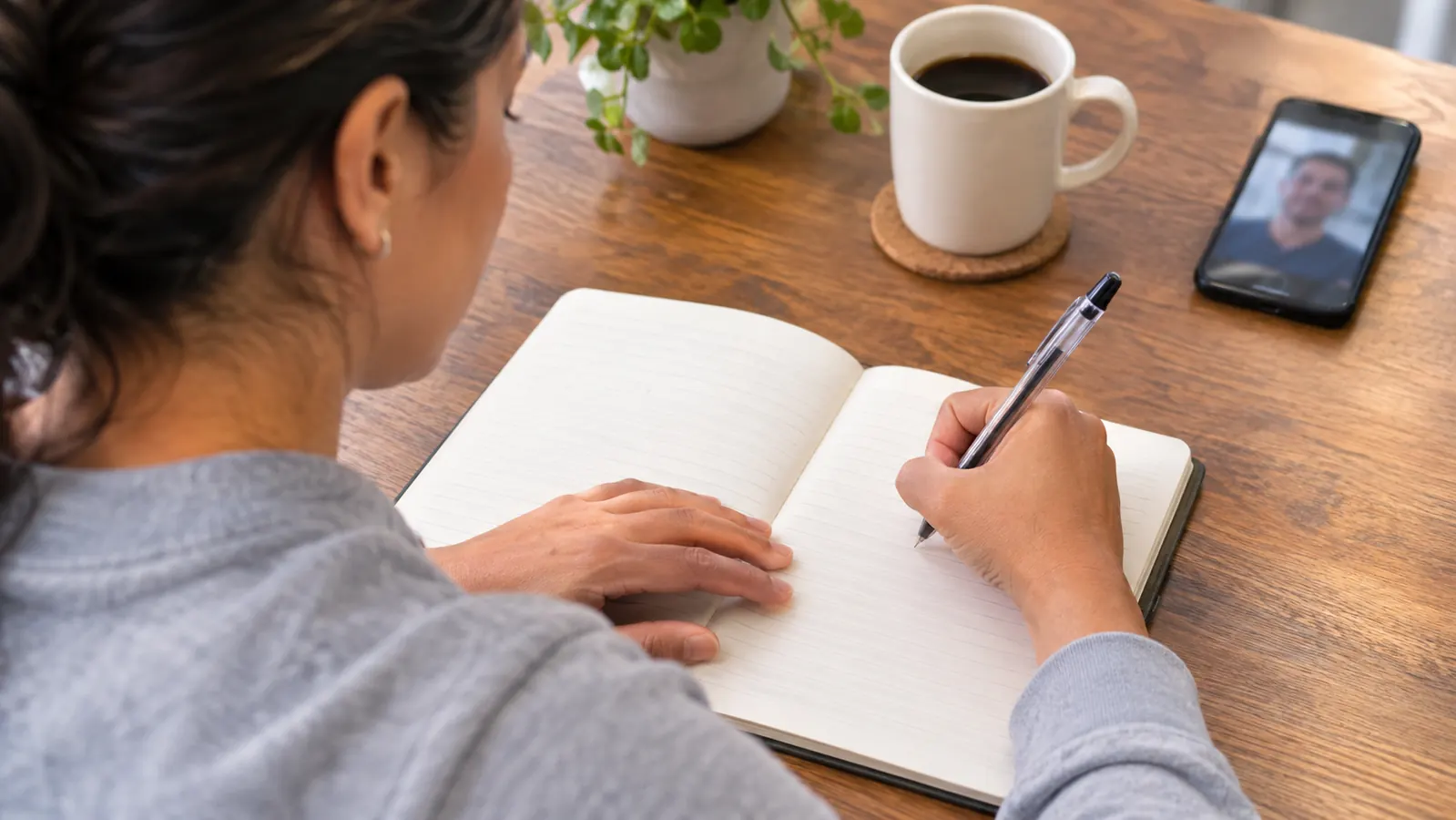
I write mine at the kitchen table after a run of shifts, which means the handwriting on some pages looks like it was done in a moving car. I stopped caring around the third letter. He has never mentioned it, and he is the sort of man who would mention it. If your handwriting is bad after a twelve hour shift, write it after a twelve hour shift anyway. The page still reads better than a text.
Pen, not pencil. A pencil smudges against the envelope in a bag, and by the time it arrives the page looks like a draft somebody abandoned. I use whatever ballpoint is in the jar by the sink, which is not romantic and does not need to be.
Keep the sitting short. Twenty minutes is enough for one page. If I sit down meaning to fill in three, I get one that is worth reading and two that read like a status update about my week and the traffic on 281. One good letter beats three dutiful ones, especially when the good one is going to be sealed and carried around in a backpack for a month.
Step 3: Seal it, date the outside, and say when to open it
The book has its own way of sealing a finished letter and I use it every time, because a sealed letter is a different object from an open one. An open page gets read while he is also watching something on his laptop. A sealed one makes him decide to open it, and that decision is most of the point of the whole thing.
On the outside I write the date and one plain instruction. Not a riddle, not a countdown to a holiday. Something like open on a bad Wednesday, or open the night before I land. Specific beats poetic here. The one time I wrote open when you need it, he sat on it for two months, because he was never completely sure the moment qualified.
Not every letter gets mailed. About half are hand delivered at the end of a visit, and that is the better version. He opens it on the plane, somewhere over the middle of the country, and I get the text about it before he lands in Portland. I have not decided yet whether that is nicer for him or for me.
Step 4: Hand it over at the gate, or mail it the slow way
If you are handing it over, put it in the outside pocket of a backpack, not in the suitcase. The suitcase gets unpacked a day later and the letter vanishes into a pile of laundry for a week. The backpack gets opened at altitude, which is a good place for it.
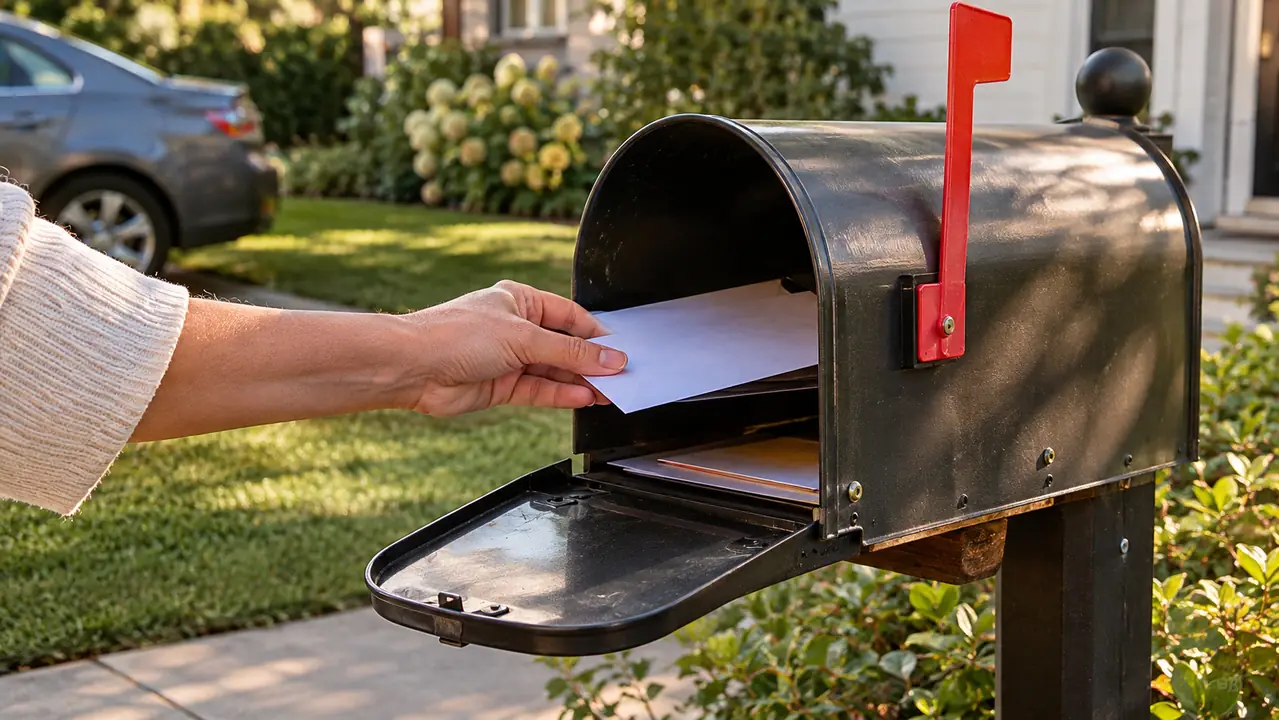
If you are mailing it, a plain envelope and one stamp will do it. Mine go out from the post office I already walk past on my day off, and they take about six days to reach the West Coast. Six days turns out to be the right speed. A letter that arrives on a Thursday is a small event in a week that had nothing in it. The same sentences in a text are gone in four minutes and neither of us could tell you afterwards what they said.
I have mailed three so far. Two of them landed on days when nothing else was happening, which is exactly when they do the most work.
Step 5: Keep the book where you will trip over it, and keep a short log
The book lived in my desk drawer for the first few months, which is where unopened mail goes to die. Now it sits on top of the drawer's contents where I see the edge of it when I reach for a pen. Small change, large difference. The Chronicle Books volume is 0.8 inches thick, so it does not need a shelf. It needs to be visible.
Keep a short log on the last page or in the notes app on your phone. Date, which prompt, mailed or handed over. Three columns, ten seconds of work. This is bookkeeping, not sentiment, and it solves two things at once: writing the same prompt twice, and the low grade guilt of not knowing how far behind you are.
You will be behind. I bought this book a year ago and have filled in a handful of letters, not the whole thing, and I have stopped treating that as a failure. Working through the book over a couple of years is the design, not a deadline. He has never complained about the pace. He complains about the airport, the time zones, and the fact that Portland has no good breakfast tacos, in that order.
What Else Helps
Letters do one narrow thing well. They are slow, they are physical, and they are handwritten. They cannot tell your partner you got home safely, and they cannot carry a Sunday night call. For the rest of the week I use four other things, and I am honest about which ones earn their place on the nightstand.
The Friendship Lamp set is the first thing I would replace if it broke tomorrow. One sits on my nightstand, one sits on Daniel's, and we tap them at the end of a shift so the other one glows across two time zones. It runs on 2.4 GHz Wi-Fi through the Friendship Lamps app, and it does not produce true white light, so it is a signal light and not a reading lamp. When my router was replaced it dropped off the network once, and re-adding it in the app took about ten minutes.
The TOTWOO Sun and Moon bracelets cover the hours when I cannot look at a phone. I wear one, he wears the other, and a tap sends a short buzz. I take mine off for showers and charge it on its cable on the kitchen counter every few days. It pairs through the free TOTWOO app with no subscription. I forgot to charge it before a shift once and it died halfway through, which is what happens when your charging routine lives on a counter next to a coffee grinder.
Talking Point Cards, the 200 card couples deck, lives on my coffee table next to my laptop. On Sunday calls we pull a few, usually from the deeper color coded categories, and they carry about forty five minutes of conversation that would otherwise be weather and logistics. We have also brought the box on two visits, which is how I know it works in person and not only over a video call.
The Aura Carver 10 inch frame sits on Daniel's kitchen counter in Portland. I add photos from my phone through the Aura app, a few a week, often from my walk home or from a day off. There is no subscription. His apartment had almost no photos in it before that. I only see the frame in person when I fly out, which is its own small pleasure.
If you only add one thing, add the letters. If you want the longer version of how any of these have held up, I have written about each of them separately, including an honest review of the letter book and a comparison of it against the open when envelope kits people keep recommending.
Two of the three letters I have mailed landed on days when nothing else was happening. That is exactly when they do the most work.
The middle weeks are the hard part
One book, one pen, twenty minutes at the kitchen table, and he has something to open that is not another notification.
Amazon Check Today's Price on Amazon →