
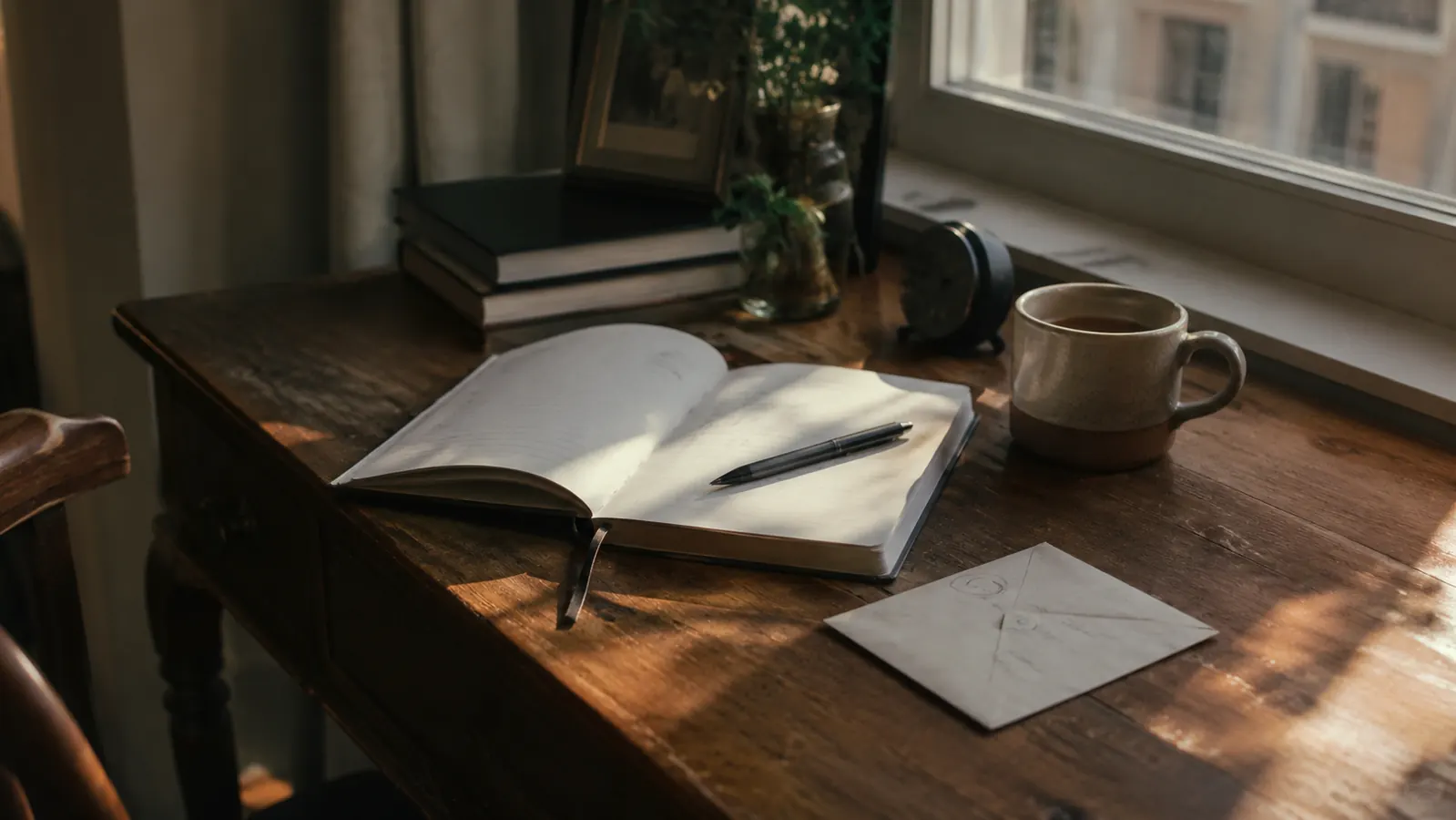
The first thing I got wrong about Letters to My Love was assuming it was a book you read. It is not. It is a book you fill in, one letter at a time, then seal and hand over. Chronicle Books builds the whole thing around a gummed flap on every letter, and once that flap is wet and pressed down, the letter is closed for good. I sat at my desk with it open in front of me for twenty minutes before I wrote a word. Not because I did not know what to say. Because I knew that whatever I said would be the version he kept.
I bought it a year ago, in the fall, in the middle of a three year long distance stretch with my partner Daniel. He is a civil engineer in Portland, Oregon. I am an ER nurse in San Antonio, which puts two time zones between my kitchen and his. We see each other about every six weeks, four days at a time, and we alternate who flies. In twelve months I have filled in a handful of the twelve letters, not the whole book. That is the honest center of this review. Depending on the kind of person you are, a half filled letter book is either the entire point or the reason to buy something else, and nobody selling this will tell you which one you are.
The Quick Verdict
A well made, genuinely moving object for someone who writes slowly and means it. Not a gift you finish, and not a stand in for daily contact.
Amazon Check Today's Price →Twelve letters he can hold instead of a message he scrolls past
The prompts do most of the heavy lifting. You bring the handwriting and the nerve. It is a slim book that lives in a desk drawer between letters and asks nothing of a battery.
Amazon Check Today's Price on Amazon →What This Book Actually Is
Physically it is small. Eight inches tall, 3.8 inches wide, 0.8 inches thick, and 4.8 ounces on my kitchen scale, which makes it lighter than the water bottle I carry through a twelve hour shift. It disappears into my desk drawer. There is nothing to charge, nothing to pair, no app to update, and after a year of lamp firmware and bracelet pairing, that absence is a genuine pleasure. The operation mode is manual in the most literal sense: the only power source is you sitting down.
Inside are twelve letters. Each one has a prompt printed at the top and blank space underneath, and each one has that flap. You write, you fold, you seal. According to the listing, the series has sold more than 2 million copies worldwide, which tells you the format works for a great many people and also that this is not a rare handmade object. It is a well produced book from Chronicle Books. It will look like a book on a shelf, because that is what it is.
The paper takes a ballpoint well and a fountain pen badly, in my experience, which is the kind of thing no listing will tell you. I used a plain black ballpoint for the first three letters and switched to a finer tip after that, because my handwriting at the end of a shift is not the handwriting I have on a day off. Nobody warns you that your penmanship is going to be part of the record.
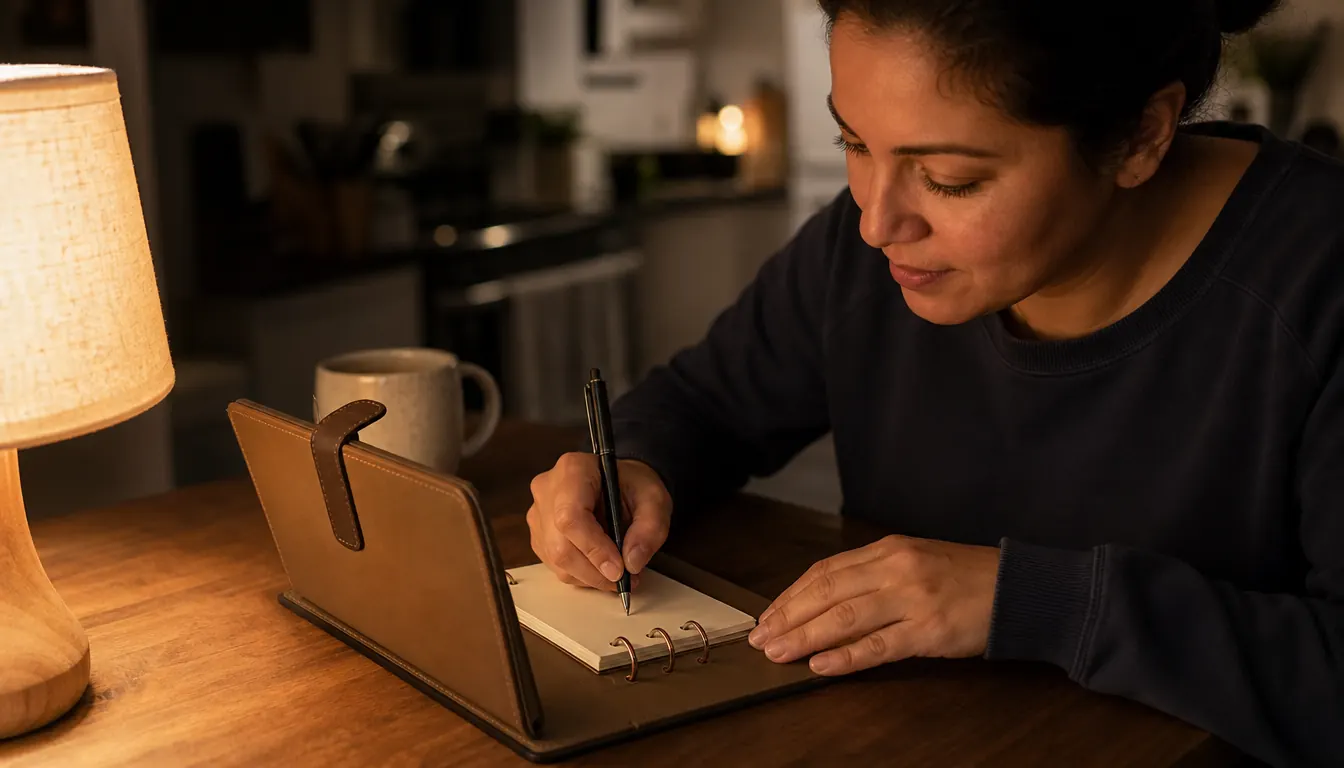
How I've Used It Over a Year
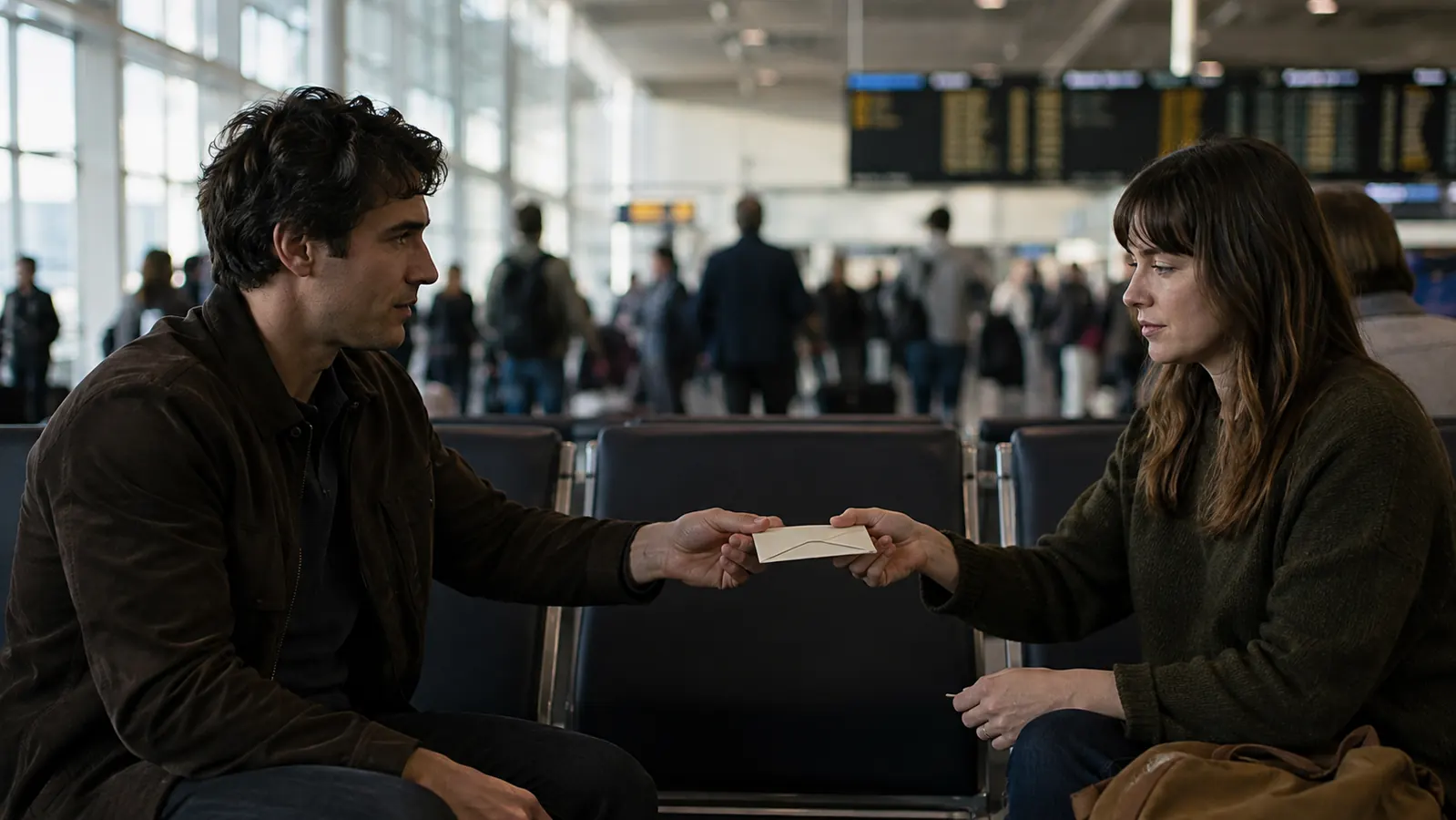
I write one letter at a time. The book goes back in the drawer between them, sometimes for weeks. When Daniel visits, I hand him whatever is sealed at the end of the four days, usually at the airport, once at my kitchen table before we left for the airport. When I cannot wait for a visit, I mail one. Neither method has failed me. Nothing has been lost.
I have mailed two. The first one I stood in line at the post office on a Tuesday morning after a night shift, which tells you how badly I wanted it gone before I changed my mind about it. It arrived in four days. Daniel called instead of texting, which he almost never does, so I knew it landed the way I hoped it would.
He reads them slowly. That is not a figure of speech. He opens one, reads it, sets it down, and comes back to it later, sometimes the next day. The first time I watched him do it I thought something was wrong. It was not. A letter that took me twenty minutes to write is not something he can absorb in the eight seconds it takes to read a text, and watching him take his time with it changed how I thought about the whole project.
The letter I remember writing is the one about the airport. There is a specific gate in San Antonio where I have cried exactly twice, and the prompt asked about a place that matters, so I wrote about that gate. It took me half an hour. He has read it more than once. That is the thing a text cannot do, not because texting is bad, but because a text is built to be consumed and this is built to be kept.
The Prompts Are Better Than I Expected
I expected the prompts to be useless. I expected something along the lines of telling him how you feel, which is the sort of instruction that only helps the people who did not need help. What is actually inside is more specific. Several prompts ask about a moment, a place, or a thing you noticed, and that is a much easier door to walk through than an abstract feeling. I wrote two letters in one sitting because of it.
There is a ceiling on it. A few prompts landed flat for me. One asked something about the future that I could not answer without sounding like a wedding toast, so I wrote around it and felt a little like I had cheated. The book cannot know your relationship. It is a set of good questions, not a set of perfect ones, and the difference matters if you are the sort of person who tries to answer the question exactly as it was asked.
If you need the right words handed to you, this helps enormously. If you resent being prompted at all, you will find the printed questions intrusive and a little bossy. A blank notebook costs less and gives you nothing to push against. Some people need something to push against. I am one of them.
What Nobody Tells You
Nobody tells you that a twelve letter book is a year long commitment dressed up as a gift. I have had this for twelve months and I have not finished it. For a while that bothered me. I would open the drawer, see the empty pages, and feel behind on my own relationship, which is an absurd thing to feel about stationery. The fix was deciding the book is not a checklist. Twelve letters in a year is one a month, and one a month is a lot of handwriting for someone working rotating twelves. A handful of letters that say something true beats twelve that say something dutiful.
Nobody tells you the sealing is irreversible in a way that stops some people cold. There is no draft. There is no edit. There is no unsend. If you have ever typed an honest message, reread it, and deleted it, this book will make you confront that habit directly. My first sealed letter has a crossed out word in it. I sent it anyway. Daniel says the cross out is his favorite part, and I have decided to believe him.
Nobody tells you how little room there is. The page is small. My handwriting is not large and I still had to choose two things to say instead of five. Mostly that constraint is a feature, because it forces the kind of editing a text never asks for. But if your instinct is to write pages, you will feel the walls by letter two.
Nobody tells you it runs one way. Only I write. Daniel reads. If you want something the two of you fill in together, this is not that, and the mismatch will be obvious by letter three. The conversation card box on my coffee table is the two way thing in our routine. This is the one way thing, and it only works if the person who is not writing is genuinely happy to be the audience.
And nobody tells you it will not make the distance smaller. It does not replace the daily contact, the lamp that signals I am home, the bracelet that buzzes during a shift, the Sunday call. What it does is put something physical in his hands that came from mine. That is a real job and it is a smaller job than the marketing suggests. Bought for that reason it is worth every inch of drawer space. Bought to fix something, it will not.
One more thing. It does not look like much on a table. It is a slim book with no box, no ribbon, and no card explaining what it is. If you are handing this to someone who expects a gift to have a reveal, you will need to say out loud what it is and what you plan to do with it, or it will read as a book they have been assigned to read.
The Thing I'd Change
If I could change one thing about the Chronicle Books format, it would be the number. Twelve letters is a lovely idea and a heavy promise. A six letter version would fit more relationships, including mine, and would actually get finished. The other thing I would change is the pacing advice, or the lack of it. Nothing in the book tells you it is fine to take a year. The product photographs show a tidy stack of sealed letters, and a tidy stack is not what most people will have in month four.
None of that is a defect exactly. A book that pushes you is doing something a blank notebook cannot, and the prompts are the reason I finished as many letters as I did. But an honest review has to say that the design assumes a writer with more free evenings than an ER nurse on rotating twelves, and the space between that assumption and real life is exactly where the guilt creeps in.
What I Liked
- The prompts are specific enough to write from, which is the whole job
- Nothing to charge, pair, or subscribe to
- Small enough to live in a desk drawer at 8 by 3.8 by 0.8 inches and 4.8 ounces
- Sealed letters become objects he keeps, not messages he scrolls past
- Handwriting slows the exchange down in a way a text never can
Where It Falls Short
- Twelve letters is a year of writing, not a finished gift you hand over
- Sealing is permanent, with no draft and no undo
- The small pages limit how much you can actually say
- One directional: only the giver writes, the partner reads
- It will not help if your person does not read cards or letters at all
Twelve letters in twelve months would have been a performance. The three that meant something are the reason this book is still in my drawer.
Who This Is For
This is for the person who writes slowly and means it. If you keep a notebook, if your texts run to full paragraphs, if you draft a message four times before sending it, this book is aimed squarely at you. It suits people with a milestone in sight: an anniversary, a deployment, a move, a reunion, the last stretch of a distance that is finally about to close.
It also suits the partner who keeps things. Daniel has a shoebox. The letters go in it, along with airport parking stubs, which he also keeps for reasons I have never fully understood. If your person is the type to throw cards away after a week, the effort is still worth making, but expect a moment rather than a keepsake.
And it suits anyone who wants to give something with a year of life in it. A scarf gets worn and a candle gets burned. This sits in a drawer and waits, and every time you open that drawer you are reminded of a person, which is a strange and specific kind of gift that not everybody wants to receive.
Who Should Skip It
Skip it if you hate writing by hand. Not dislike. Hate. The prompts cannot do the physical work for you, and a half filled book with a guilty owner is a worse gift than no book at all. Skip it if you want something the two of you do together, because this is a solo act with an audience of one. Skip it if your partner does not read cards, letters, or long messages, because you will be writing into a void and you will feel it around letter four.
Skip it if you need the gift to arrive finished, because there is no completed version of this to hand over. And skip it if what you actually want is daily contact, since a letter book is a slow object by design. For daily I would point you at the lamp on my nightstand or the bracelet on my wrist. Both of those do their job every single day and neither one requires you to be a writer.
Where It Fits in a Long Distance Routine
A year in, this is the fifth thing in my long distance kit and the slowest. The lamp signals the end of a shift. The bracelet buzzes during one. The cards fill a Sunday call. The frame on Daniel's kitchen counter shows him my walk home. The letters are the only one that asks me to sit still, and the only one that leaves a physical object behind in Portland. On any given Tuesday it is the least useful of the five. It is also the one I would grab first if the apartment were on fire.
One sealed letter is enough of a start
The format does the rest. It is a slim book you can begin tonight and finish over a year, and 4.7 stars from more than 2,400 buyers suggests most people stick with it longer than I did.
Amazon Check Today's Price on Amazon →